


Max Guemto Book a call

GMTO Ateliers · AI Systems Designer

Intelligent systems for modern brands.

Agents, automation, fashion imagery and Shopify storefronts. Designed, built and shipped end to end by one person.

AI Agent Systems

Autonomous, end to end multi-agent systems

Business Automation

Documents into automated workflows

AI Fashion Imagery

One garment photo into full campaign assets

Shopify Stores

Design and development

The problem

Somebody is still doing it by hand.

You already know which one is yours.

You rebuild the same report every week, from four exports.

1 to 4% error rate per field, manual entry

On a fifty-line document that is one or two wrong numbers, every single time, and nobody finds them until a client does.

You answer the same eleven emails, again, in your own words.

The good answers live in one person’s head. When that person is on holiday, the replies get worse and everybody notices except the person writing them.

Every AI session starts from zero.

You re-explain the project, the stack, the decisions you already made and the approaches that already failed. Developers describe it as supervising a junior with short-term memory loss. The lesson you learned last month is simply gone.

And none of it is hard. It is just endless.

That is the part that makes it invisible. No single instance is worth a meeting, so it never gets fixed, and it quietly eats a day a week forever.

Figures: Conexiom data-entry error benchmarks · Gartner accountant survey · published research on context loss in AI coding agents. Sources listed in the claim ledger, and I will send them if you ask.

Services

What I build.

Four services. If what you need is not one of them, I will tell you on the call and point you somewhere better.

AI Agent Systems

Autonomous, end to end multi-agent systems that do a real job rather than demo one. Supervised for a month, then they earn the right to run alone.

  • Support and sales inboxes that draft, send what they are sure of, escalate what they are not
  • Research and reporting agents with a memory that survives the session
  • Internal agents wired into the tools you already pay for

Business Automation

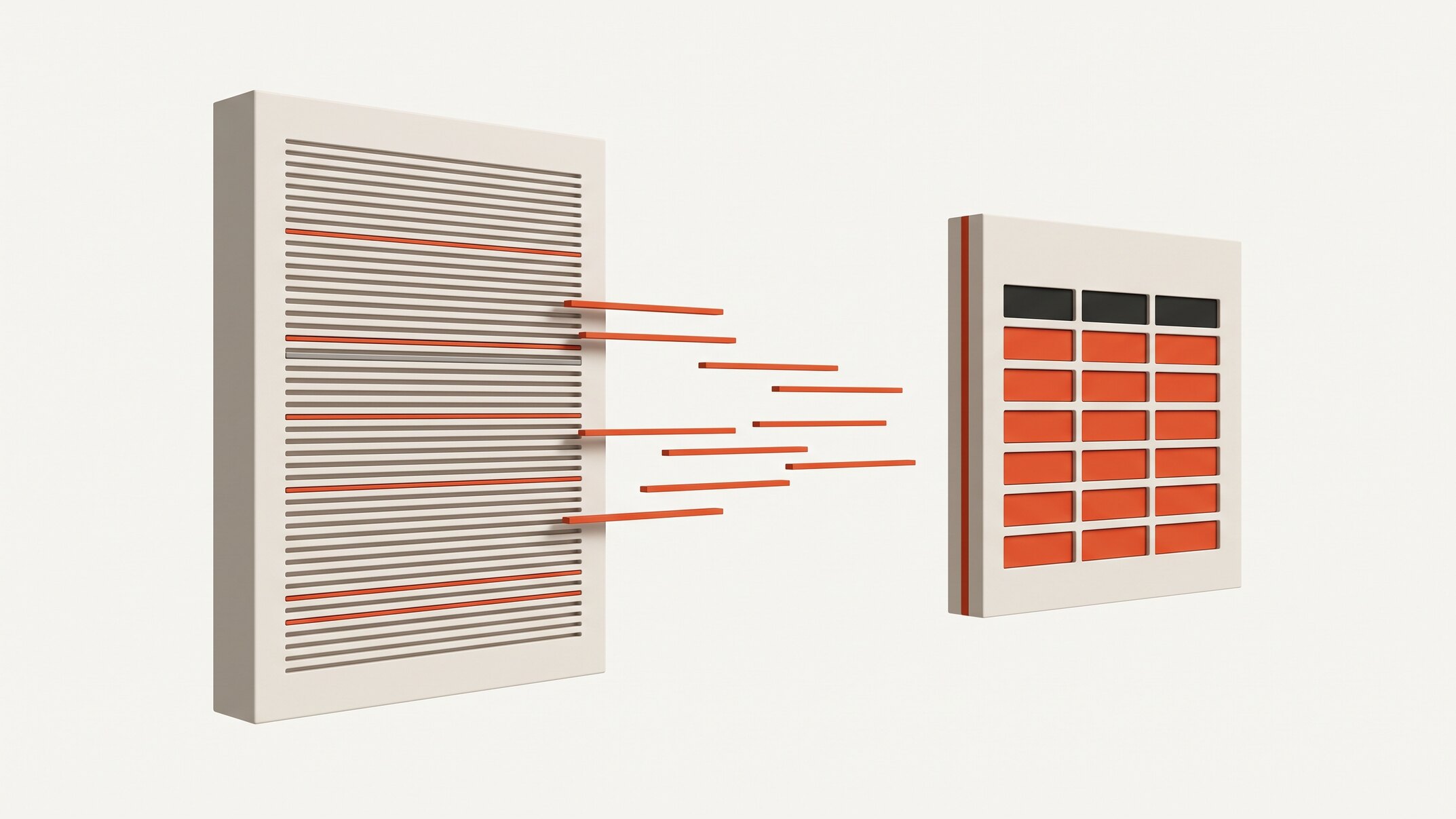
Documents in, structured data out, reconciled against the source so you can prove it did not invent anything. This is what LV2XL does for Swiss tenders, built once and now sold as a product.

  • PDF, email and form intake into clean, checkable spreadsheets
  • Anything uncertain flagged for a human instead of guessed
  • A reconciliation report on every run, not a promise

AI Fashion Imagery and Video

One garment photo into a full set of campaign assets. Built by somebody who makes patterns, which is why the render does not lie about how the fabric falls.

  • Ghost-mannequin, on-model and campaign imagery from a single photo
  • Video from the same source, consistent across a drop
  • The failure cases named up front: sheer, chunky knit, technical seams

Shopify Stores

Design and development on Dawn, built so the next change does not cost you another app subscription. Two storefronts shipped and running.

  • Custom sections instead of another app in the stack
  • Localisation, wishlist, reviews and email wired properly
  • A theme you can still edit in a year
Process

How it works.

Five stops from a first call to a system you own. Pick any one to see what you walk away with.

Discovery call

Fifteen minutes on one process that annoys you. By the end you know whether it is worth automating, roughly what it would cost, and whether I am the right person to build it. If we are not a match, I say so on the call rather than three weeks later.

You walk away with

A straight answer on whether automation is worth it here at all.

Costs nothing. No proposal deck.

The process map

Your workflows written down the way they actually run, not the way the handbook says. Every candidate for automation ranked by leverage, with the effort and the risk sitting next to it, so the decision is yours and not mine.

You walk away with

A ranked map of your own operations.

Yours to keep whether or not we build anything.

We build your number one pick

The highest-leverage system on the map, built first and built alone. Scope and price are fixed in writing before anything starts, so the number you hear on the call is the number on the invoice.

You walk away with

A working system, in your repository, on your infrastructure.

Fixed scope. Fixed price. No hourly billing.

Supervised for a month

A human approves every output before it goes anywhere. We tune it against real cases until the approvals stop being corrections. Autonomy is earned here, it is not switched on at launch.

You walk away with

An error log you can read, and a system that has proved itself on your own work.

Nothing runs unsupervised on day one.

It runs, then we go down the list

It goes live and runs without me in the room. Then we take the next item off the map, or we do not, and either way nothing about your setup depends on me still being here.

You walk away with

A runbook written for somebody who is not me.

Exit terms agreed before we started.

The system runs on your infrastructure. The code is yours.

In your repository, on your servers. A runbook written for somebody who is not me. Exit terms agreed before we start.
Fit

This is for you, if…

I would rather lose the call than waste it, so here is the honest split.

Yes, if

Same job, every week

The same work happens every week, in more or less the same way.

Being wrong has a cost. A wrong number, a missed reply, a product image that misleads.

You want to own what gets built, rather than rent it.

Probably not, if

Different job, every month

You want one tool set up this week.

Nobody internally can answer questions about how the process actually runs today.

The process changes every month. Automate a moving target and you get an expensive moving target.

Case studies

Case studies.

Products and storefronts that run without me in the room.

Live

LV2XL

A live SaaS · Swiss construction estimating

Reads standardized NPK tender PDFs, separates billable positions from structural rows, and outputs clean, editable Excel. It never guesses. Anything uncertain gets flagged for manual review. A 146 page priced tender reconciled to its source total of CHF 1’292’588.50, to the cent.

Norm SN 506 511 · Stripe payments · paying customers

MayI Studio

An AI imagery pipeline · fashion

One garment photo in. Ghost-mannequin product shots, on-model imagery, campaign creative and video out. Built end to end, shipped, and bought by a fashion brand.

Built on pattern-making, not prompting

Shipped

Two Shopify storefronts

Dawn based · one fully localised

Built and handed over, including localisation, wishlist, reviews and email. Custom sections instead of stacked apps, so the owners can still change things without paying for another subscription.

Shipped and running

Questions

Before you book.

What does it cost to work with you?

It depends on how many of your systems it has to reach into, so I am not going to pretend there is a list price.

What I will commit to: fixed scope and fixed price, agreed in writing before anything starts. No hourly billing, no open-ended retainer. You get a real number within a day of the call.

How long does a typical project take?

The process map takes about two weeks. The first system usually ships in four to six weeks, then runs supervised for a month.

What if the system gets something wrong?

It will, sometimes. That is exactly why nothing runs unsupervised on day one, and why every system flags what it is not sure about instead of guessing.

For the first month a human approves the output. It earns autonomy. It does not start with it.

Do I own what you build?

Yes. Code in your repository, a runbook written for somebody who is not me, and exit terms agreed before we start.

If you want to take it in-house or hand it to another developer, nothing stops you.

Who will I actually work with?

Me. One person, based in Seoul. You talk to whoever builds it rather than to an account manager, so nothing gets lost on the way to the person writing the code.

On the hours: Seoul is seven hours ahead of Berlin in summer, eight in winter. My best hours, 14:00 to 20:00 here, land as 07:00 to 13:00 there. A reply I write at the end of my day is waiting at the start of yours. Calls up to about 15:00 European time work fine.

The fair version of the question is who fixes this in month seven. That is answered in the contract, not on a sales call: code in your repository, a runbook, and exit terms agreed before we start.

What happens to our data?

The short version: it stays with you. Wherever it is technically possible the system runs on your infrastructure rather than mine. The support-inbox agent I run today sits on the client’s own server, in their own environment. Nothing gets copied onto a machine of mine in order to be processed.

Where a model provider is involved, it is named in the contract before we start, together with what it does and does not do with what it sees. The processing agreement under Art. 28 DSGVO, with standard contractual clauses, is signed before anything touches real data.

I build against sample data you have cleared, not against your production records. If your data cannot leave the EU at all, tell me on the call. It narrows which models I can use, and that is much better to know in week one than in week four.

Fifteen minutes. Bring one process that annoys you.

What the call is for

By the end you will know whether it is worth automating, roughly what it would cost, and whether I am the right person to build it. If the answer is no, I will tell you.

What is in the fifteen minutes

  1. 01You describe the process and who touches it.
  2. 02We work out whether it is worth automating, out loud.
  3. 03You get a yes, a no, or the reason it is not ready yet.

No deck, and no proposal inside the call.

Book a 15-minute call

Prefer to write first? Use the contact page →